
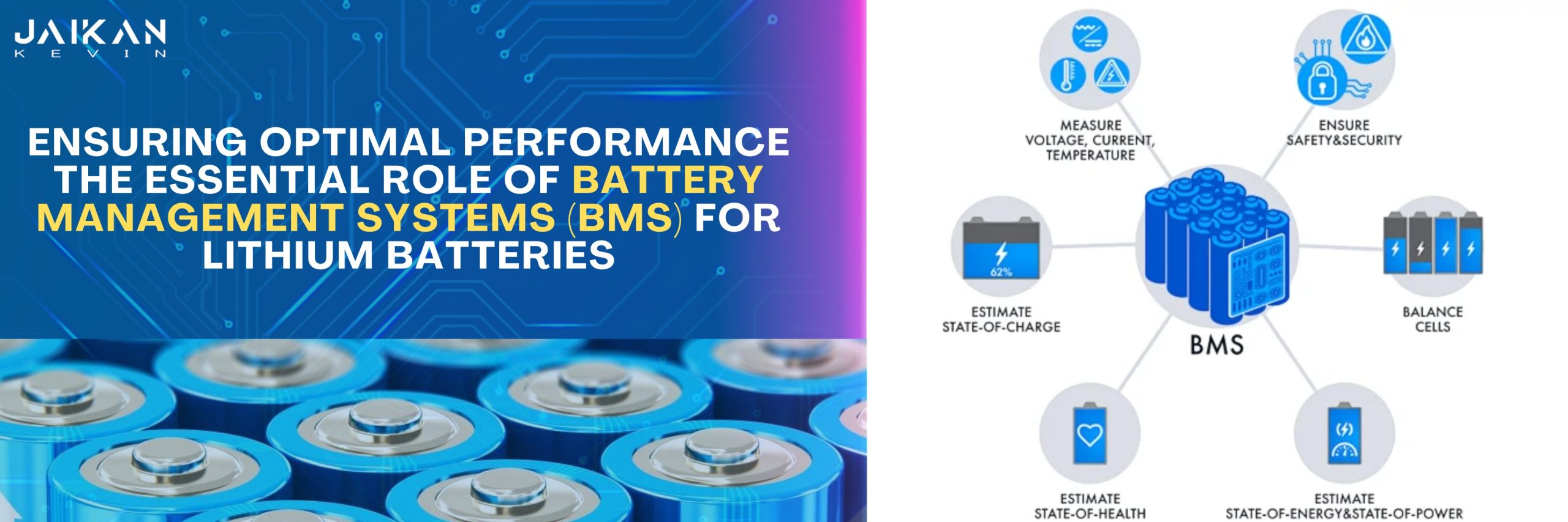
In the rapidly evolving landscape of energy storage, lithium batteries have emerged as a leading choice due to their high energy density, long lifespan, and quick charging capabilities. However, to harness the full potential of lithium batteries and ensure their safe and efficient operation, a robust Battery Management System (BMS) is crucial. Let’s explore why a BMS is essential for the smooth functioning of lithium batteries, highlighting its key functions, advantages, and overall importance.
1. Understanding Battery Management Systems (BMS)
A Battery Management System (BMS) is an electronic system that manages the operations of a rechargeable battery, ensuring it operates safely, efficiently, and reliably. For lithium batteries, which are sensitive to overcharging, deep discharging, and thermal fluctuations, a BMS is indispensable.
2. Key Functions of a BMS
Monitoring: A BMS continuously monitors the voltage, current, and temperature of each cell within the battery pack. This realtime data is crucial for assessing the health and performance of the battery.
Balancing: During charging and discharging, cells within a battery pack can become imbalanced, leading to unequal performance and potential damage. A BMS ensures that all cells are charged and discharged uniformly, optimizing the overall battery performance.
Protection: The BMS provides critical protection by preventing overcharging, overdischarging, and shortcircuiting. These safeguards are essential for maintaining battery integrity and preventing potential safety hazards.
Thermal Management: Lithium batteries are sensitive to temperature extremes. A BMS monitors and manages the temperature of the battery pack, activating cooling mechanisms or shutting down the battery if necessary to prevent overheating.
Communication: Modern BMS units can communicate with external devices, providing valuable data on battery status, health, and performance. This information can be used for predictive maintenance and optimizing energy usage.
3. Advantages of a BMS for Lithium Batteries
Enhanced Safety: By preventing conditions that could lead to thermal runaway, fires, or explosions, a BMS ensures the safe operation of lithium batteries. This is particularly important in applications where safety is paramount, such as electric vehicles and energy storage systems.
Extended Lifespan: Proper management of charging and discharging cycles, along with thermal regulation, significantly extends the lifespan of lithium batteries. A wellfunctioning BMS can prevent premature degradation and maintain battery capacity over time.
Optimal Performance: A BMS ensures that lithium batteries operate within their optimal parameters, delivering consistent and reliable performance. This is crucial for applications that require high levels of reliability, such as backup power systems and portable electronics.
Efficiency: By balancing the cells and optimizing charge cycles, a BMS maximizes the efficiency of the battery pack. This leads to better energy utilization and reduced energy waste.
4. Applications Benefiting from BMS
Electric Vehicles (EVs): In EVs, a BMS ensures the safe and efficient operation of the battery pack, optimizing range, performance, and longevity while protecting against potential hazards.
Renewable Energy Storage: For solar and wind energy systems, a BMS manages the storage of fluctuating energy inputs, ensuring reliable power supply and prolonging battery life.
Consumer Electronics: From smartphones to laptops, a BMS in consumer electronics ensures batteries are charged safely, extending their useful life and preventing malfunctions.
Industrial Applications: In industrial settings, a BMS provides reliable power management for machinery and equipment, enhancing operational efficiency and safety.